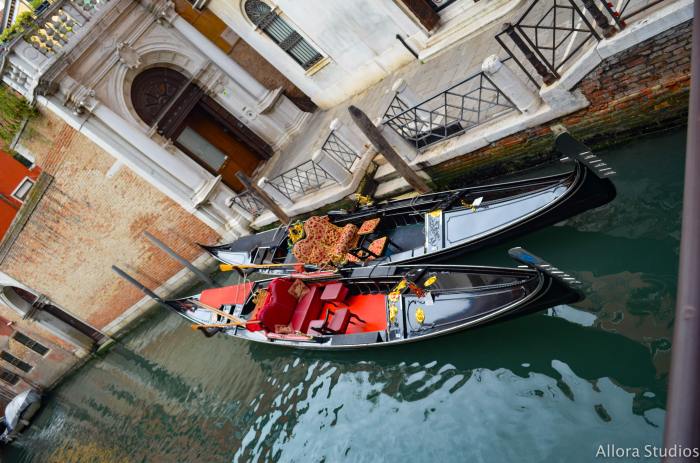
Venice is famous for its mode of transportation. The gondola was created because of the needs of Venice. Its shape is similar to a canoe, but gondolas are more narrow. This makes it easy for gondolieri, or gondola drivers, to navigate the narrow canals around the lagoon city.
The history of the gondola is not clear. They’ve more or less always been part of Venetian life. Around the 1500s, there were about 10,000 gondolas in use. Today, it is mostly tourists who hire gondolieri, but it is still a staple of Venetian lifestyle.
Today’s standard length is 35.5 feet long and 4.5 feet wide. They weigh around 1,500 pounds. There are 280 pieces that are handmade out of 8 different species of wood. At a price of about €40,000, one gondola would take around 2 months to complete.
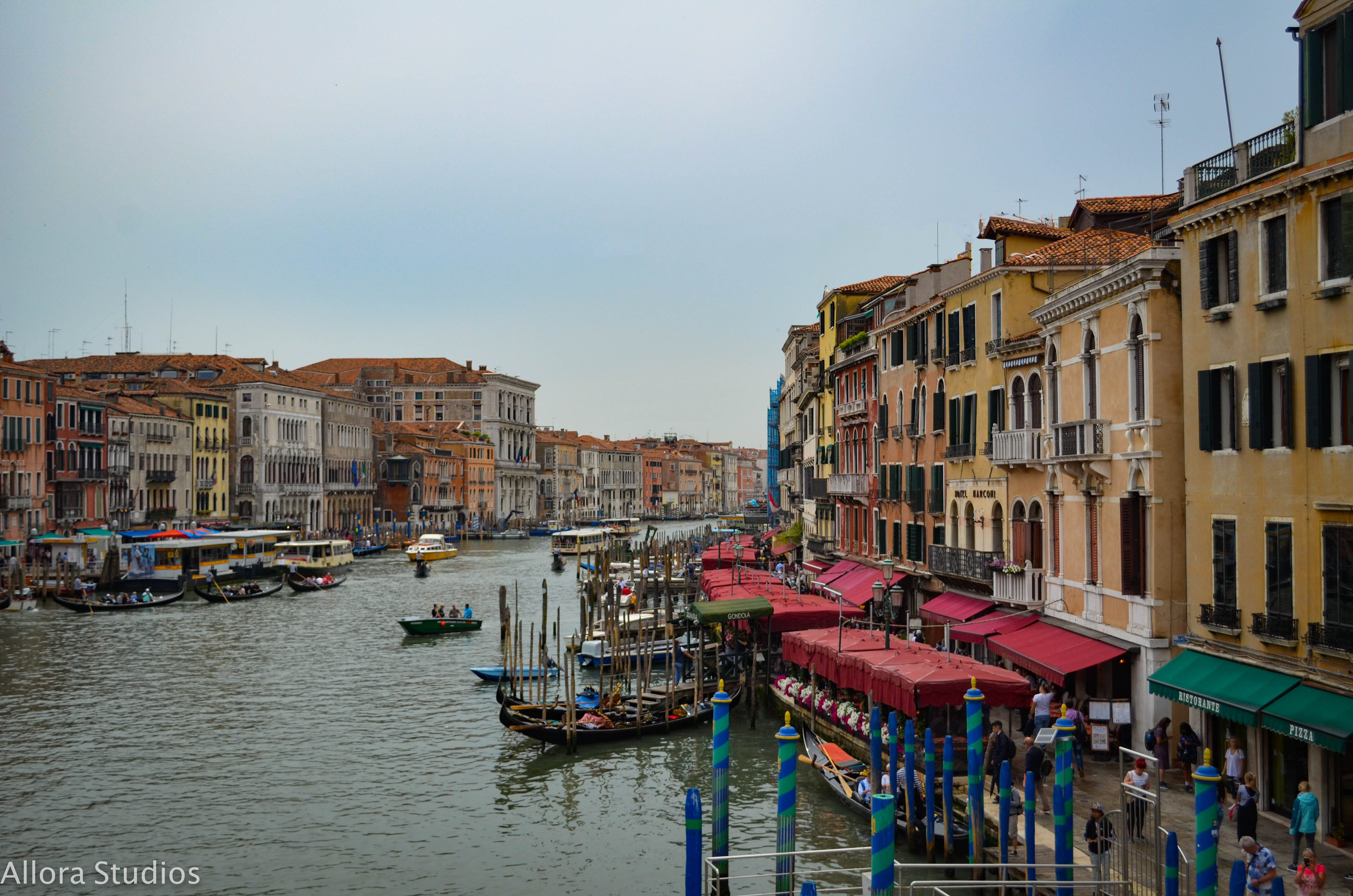
The Gondola is a symbol of Venice itself. The iron head of the gondola not only balances the weight of the gondolier, but it also has the shape of the Grand Canal on it. On the end of the boat, there are 6 prongs that represent the 6 sestieri, or districts, of Venice. Between them, there are often 3 ornaments representing the 3 islands of Venice. There’s also symbolism for a Doge’s cap, the Rialto, and the island of Giudecca on most gondolas.
The gondolieri wear a white shirt with either blue or red stripes. Black pants, a wide brim straw hat, and a red scarf are also typical of a gondolier uniform. Gondolieri are managed by a guild that issues limited licenses per year. To obtain a license, there is 6 month of training, an apprenticeship, and a comprehensive exam. The exam covers topics like Venetian history, landmark knowledge, foreign language skills, and other practical skills. All that work is worth the reward, though. Gondolieri can make up to $150,000 a year.
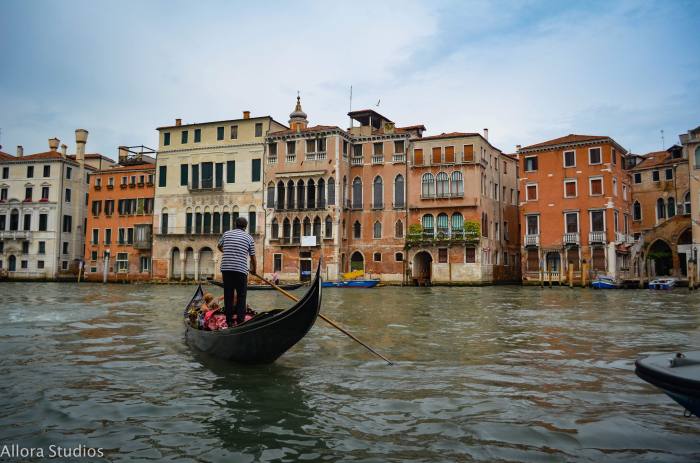
We didn’t have the time or the money for a ride in a gondola on this Venetian getaway, but it is definitely on my bucket list. At €80 a ride, it’s not exactly the most economical way to travel the lagoon, but it provides the best view of the Grand Canal. Until we meet again, Venice.
 Allora Studios